

Your school relies on the support of one central component for fundraising efforts: your community! From your students themselves to their parents, family members, neighbors, and community members in your town, your school needs to effectively rally everyone together to meet your goals, boost awareness, and establish a loyal donor pool.
Planning your school fundraiser to meet your supporters’ expectations while maintaining a way to hit your revenue goal can be tricky. However, you’ll hit your fundraising goal with ease with the right engagement strategies.
To get started, review these four proven tips for connecting with the greater school community through fundraising and maximizing your ROI.
Host Community-Centric Events for School Fundraisers
When planning your school fundraiser, consider your community’s interests. Hosting an event your audience is already excited about will draw a much larger turnout, boosting revenue and sparking interest.
The OneCause guide to school fundraising ideas recommends hosting any of the following events to increase registration numbers:
- Walkathons: Walkathons are a great fundraising event because people of all abilities and ages can participate. Host a walkathon on your school’s campus or at a popular park for increased accessibility to the community. Set up a designated walking route and encourage attendees to register in advance by paying a small donation fee. You can even amp up giving by pairing your walk-a-thon with a peer-to-peer fundraiser.
- Silent auctions: Host a silent auction online or in your school’s gym or cafeteria. Charge an attendance fee and encourage additional fundraising throughout the night by putting exciting items and packages up for bidding. Make sure you have the right silent auction fundraising platform on hand to streamline event planning and execution.
- Fundraising galas: Host a gala in conjunction with your silent auction to increase engagement and create an evening your school’s community will never forget. Partner with corporate sponsors to cover expenses like food and technology.
- Text-to-give: Text-to-give is easy, convenient, and fully online. Simply create a text-to-give campaign short code and keyword that supporters can text. Then, they’ll be sent a mobile-friendly version of your donation page where they can easily submit a gift with just a few clicks.
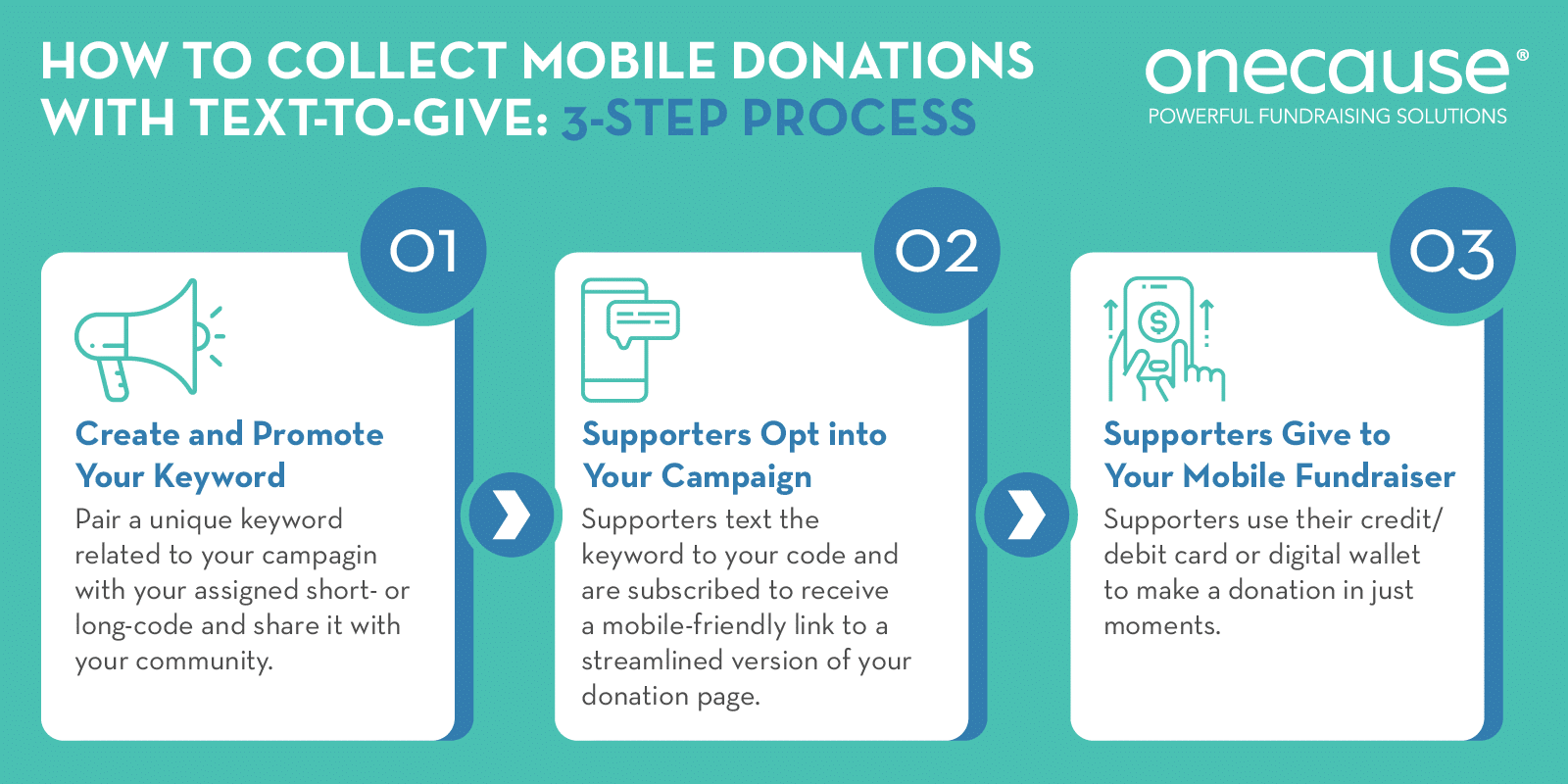
Not sure what will resonate with your community? Try out a variety of fundraisers or mix and match (such as a text-to-give campaign with a walkathon) to see what works best. Then add it into your yearly fundraising calendar to bring back annually for bigger results.
Add a Peer-to-Peer School Fundraising Component
Peer-to-peer fundraising is a sure-fire way to get everyone involved in your school’s fundraising efforts. Students and community members alike can join in on the fun, leading to a larger engagement rate across the board. Plus, it can be paired with any fundraising event to support your strategy and boost earnings.
With the right peer-to-peer fundraising software, you can empower supporters to easily create personal fundraising pages, set a goal, and share these pages widely with their networks to garner donations.
Look for peer-to-peer software with the following features:
- Fundraising microsite builder: An event microsite helps you spread the word about your event online, offers potential attendees event-specific information, and collects event registrations.
- Social integrations: Social media tools are critical to reaching new audiences online. Look at your participant experience from a supporter lens to evaluate how easy social sharing is from your peer-to-peer solution.
- Built-in gamification tools: Fundraising gamification makes charitable donations fun and social. Break out of traditional outreach by sparking engagement and competition for everyone in the community.
- Event management: From online ticket sales to express check-in and self-check-out options, your peer-to-peer solution should keep you organized before, during, and after your event.
Peer-to-peer fundraising boosts your school’s visibility, draws in more donors, and strengthens your connections within the community. Audiences are more willing to give to someone they know, and if a friend is raising money for your fundraiser, your school will likely gain a new supporter.
Create Social Media Challenges
Get the community excited about your fundraiser by sparking engagement and activity on social media. Social media is a go-to tool for expanding your reach, establishing your school’s presence in the community, and rallying everyone in support of your goals.
Social media challenges work especially well with peer-to-peer fundraising. Encourage supporters to share the link to their fundraising pages in their social media bios or posts. Your mission will automatically be promoted to new audiences through your supporters’ social media networks.
Keep these tips in mind as you set up your social media engagement strategy:
- Choose engaging challenges: Select challenges that are fun, creative, and easy to participate in. Consider themes that resonate with your audience and relate to your fundraising cause. For example, you could ask your school’s community members to share posts that show off their school spirit or videos singing your school anthem.
- Promote participation: Create eye-catching graphics, videos, or infographics to explain the challenge and its rules on your school’s social media platforms. Leverage hashtags to increase visibility and encourage participants to use them when they share their entries.
- Offer incentives: Incentives get participants excited and eager to participate. It could include prizes for the most creative entries, recognition for top fundraisers, or perks for participants who reach certain milestones.
- Partner with sponsors: Partner with local businesses or major donors to donate prizes or contribute matching funds toward your social media challenges. Their support can help increase motivation and participation while also boosting fundraising.
With social media, the sky’s the limit. Because social campaigns have no time limit, you can run them throughout the school year to keep revenue flowing.
Express Community Appreciation for Fundraising Support
The best way to retain the community’s support for future fundraisers is to thank them for their contributions. There are plenty of ways to express your gratitude to your donors. For example, you can share how their donations impacted your school and include testimonials from students or other recipients of your fundraising efforts to show your appreciation.
Some donor appreciation best practices include:
- Write personalized thank-you notes: Donors feel valued when you go the extra mile to thank them. Even if the thank-you’s aren’t handwritten, using a customized greeting with the donor’s name can add an extra personal touch.
- Shout-out your top fundraisers or participants on your social media or school website: Celebrate those who brought in the most funds publicly on your platforms. This can encourage others to fundraise more in the future!
- Host a special appreciation event: Invite participants to a post-fundraising event to give them an extra shout-out. Chatting with them face-to-face will deepen your connections with them.
No matter how you choose to thank your supporters, remember that donors who feel appreciated tend to stick around. Your school should create a comprehensive strategy around donor retention to keep individuals in your community excited and engaged with your cause.
Wrapping Up: The Power of The Right Fundraising Tools
School fundraising can feel overwhelming, but with the right strategies and tools on your side, you can effectively connect with your community and encourage their support. Work with top school fundraising software to facilitate a positive donation experience.
 This post was contributed by Sarah Sebastian, the Director of Corporate Communications at OneCause. She’s a marketer and brand geek at heart with eight years of experience in the nonprofit tech space. Outside of work, Sarah can be found reading, hiking, kayaking, volunteering for Florida Access Network, or getting lost in the woods while photographing birds.